Relationship Real Talk: From Self-Discovery to Successful Dating – Podcast

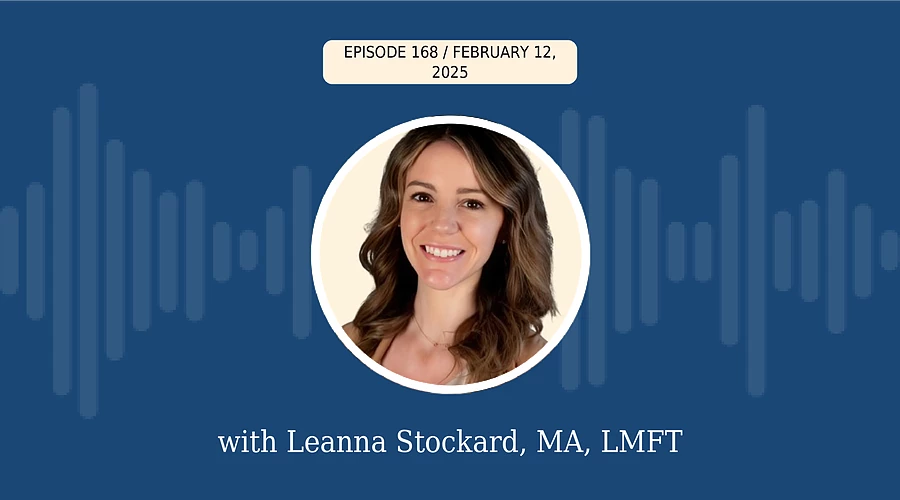
In this special Valentine’s episode, we talk with licensed marriage and family therapist Leanna Stockard about relationships and dating.
Leanna shares her insights on common barriers to forming meaningful romantic connections, the impact of past relationship experiences, the influence of dating apps and social media, and the importance of self-reflection and vulnerability in dating.
She also discusses practical advice for overcoming toxic relationship patterns and emphasizes that everyone’s dating process is unique, urging listeners to avoid comparison traps.
Learn more about Couples Therapy Services
Nicholette Leanza:
Welcome to Convos from the Couch By LifeStance Health, where leading mental health professionals help guide you on your journey to a healthier, more fulfilling life.
Hello everyone, and welcome to Convos from the Couch. I’m Nikki Leanza, and today’s episode I’ll be talking with Leanna Stockard and she’ll be giving her insights about relationships and dating in honor of our Valentine’s episode. So welcome back, Leanna, always great to have you on.
Leanna Stockard:
It’s amazing to be here. Thank you so much for having me.
Nicholette Leanza:
Tell us a little bit about yourself and what led you to specialize in relationships.
Leanna Stockard:
I’m a licensed in marriage and family therapist. I have been practicing for about eight years at this point, and I started off wanting to be truly a teacher when I was younger. I always knew that I wanted to work with people and I didn’t really think of therapy or psychology really as an option until I tried teaching in a shadowing opportunity and I realized it was not for me.
After trying to realize that I wanted to work with people and realizing teaching wasn’t really the direction I wanted to go in anymore, I started to take a deeper look into my family. My youngest brother was diagnosed with selective mutism and my family had no idea what that was or how to navigate through it.
And I started to think about not only how it was affecting him, but was also affecting our family dynamics and just how it was affecting me, my relationship with my parents, my relationships with my other siblings, how it was affecting them, so on and so forth. So once I started to realize that was an interest for me, I decided to pursue therapy as a career.
And being a licensed marriage and family therapist was definitely the route that I wanted to take so I could pursue a little bit more with adolescents and families. Once I started practicing, I really enjoyed that. But then when I started seeing couples, I realized that I really valued that work and I really enjoyed working with couples.
I felt more passionate about that than I did the original route that I went with; adolescents and families. I decided to pivot a little bit from my specialty, from families to more of the couples work, and I’ve been doing that, let’s see, since 2017. So I can’t do math, maybe almost the last eight years or so. Wait, no, that’s not right. I’m not sure.
Nicholette Leanza:
Seven years, eight years ago. I’m literally using my fingers to count there. I don’t math well either.
Leanna Stockard:
That’s why I did not become a mathematician.
Nicholette Leanza:
Same here. But let me say this, thank you for sharing the reasons of what led you to become a marriage and family therapist, because I feel couples work is equally very challenging, but also rewarding at the same time. Now, that is not a specialty of mine, but I really respect that this is your specialty ’cause it’s not easy work, but I can imagine just all the reward that also could come from it
Leanna Stockard:
Without a doubt. Absolutely. I see a lot of benefits for myself. And this might sound a little bit selfish, but seeing couples being able to just overcome their challenges just with the work that we’ve done and seeing them come out stronger a lot of times on the end of, it feels very rewarding for me, but then I’m also so proud of them for doing the work as well. So it’s amazing. I love it.
Nicholette Leanza:
And I’m sure they’re very appreciative of you as well guiding them through their relationship.
Leanna Stockard:
I hope so, but you know what? It’s all right. They’re the ones doing the hard work.
Nicholette Leanza:
As we dive in, what are the most common underlying beliefs or patterns that tend to create barriers for people trying to find meaningful romantic relationships?
Leanna Stockard:
There’s a lot of things that could lead to barriers for people. There can be some emotional barriers. Folks that have maybe struggled in past relationships, whether it was romantic relationships or friendships or family relationships, they might have developed some underlying narratives that either they’re not worthy of love, people are not to be trusted, people are using me or trying to take advantage of me, or so on and so forth.
So there could be some emotional barriers and just negative perspectives about that. There’s also some underlying fears. Fear of being vulnerable with other people and just exposing yourself in that way, a fear of being rejected or abandonment, which could lead to some attachment issues or additional anxieties.
In addition to some of the emotional barriers, there could be communication issues as well. Some folks really struggle with words with other people. For one reason or another, maybe they’re thinking about what they want to say next, or they’re just focusing on one thing that the person said, and then they’re just waiting for their turn to talk. Folks might struggle sharing their thoughts and feelings or even understanding what their thoughts and feelings are to begin with in order to share that.
And then a big piece I see is a lot of difficulty with conflict resolution too. That can definitely create a barrier to meaningful connection ’cause conflict is inevitable. It is likely going to happen, and it’s the way that we resolve it that really matters. And I think a lot of people do struggle with that resolution piece and just trying to fight well, essentially.
Nicholette Leanza:
Oh, I love how you put that, to fight, ’cause that does not come natural to us. Our defenses get up. So that tells me that’s a lot of what you’re probably trying to show your clients, how to fight.
Leanna Stockard:
Absolutely, yeah, because like I said, conflict’s going to happen. We are going to disagree, we are going to misunderstand. It’s how do we navigate through it in a way that’s respectful and kind that truly makes such a difference. Or we can feel accomplished getting through a conflict when it goes well versus if it does not go well, it can lead to more disconnection.
Nicholette Leanza:
Definitely. So we often hear the advice you need to love yourself first, but what does that actually look like in practical terms for someone who’s trying to find a partner?
Leanna Stockard:
I really struggle with that advice. A lot of folks say it to me and I’ve actually heard it myself, but I think the challenge that I have with you need to love yourself first is that true, authentic self-love can very much so be very hard to come by. And if you’re waiting in your life to feel that true, authentic self-love to the fullest, I think it just prevents us from putting ourselves out there and maybe discovering what that even means for us.
And so I think that’s why I have a really hard time with that. I do agree that we do need to love ourselves, and trying to figure out what that looks like for you is important. But I’m always hesitant to say, you can’t date anybody until you love yourself.
Nicholette Leanza:
I agree.
Leanna Stockard:
Because that’s [inaudible 00:07:02] talk. You might not love yourself fully until you’re in your eighties and now I’m ready to date type of thing. But in a practical sense, I think that loving yourself first means that you are truly trying to understand yourself. I think that is a bigger thing of it. It’s understanding yourself first that’s going to be important.
Understanding what your wants are, understanding what your needs are, understanding what you feel like you deserve in a relationship, understanding your triggers, understanding your past traumas and how these things show up in a relationship, I think that’s a big piece of trying to understand yourself.
And then in addition to that too, once we do start to date, is making sure that you’re not sacrificing parts of yourself for the sake of dating. You’re still going to be prioritizing the things that are important to you. You’re still going to be taking care of yourself and doing the things that show your body and your mind that you love it and you’re taking care of it.
And we’re not just putting that all off to the side in order for us to date or to not sacrifice that for the sake of a relationship or for the sake of dating, if that makes sense.
Nicholette Leanza:
Yes, that makes 100% sense for sure. How do past relationship experiences influence our ability to find and maintain healthy romantic connections today?
Leanna Stockard:
They can definitely influence our ability to find and maintain healthy relationships. And I think this will tie back to what I said a little bit earlier about it’s not even just past relationship experiences that can influence our ability, but also past friendships-
Nicholette Leanza:
Fair point
Leanna Stockard:
… [inaudible 00:08:39] relationships and things of that sort. Really challenging relationships that we may have had in the past can influence how we show up either in the way that we’re communicating with other people, the way that we are engaging in conflict, the way that we understand and love ourselves, so on so forth.
And so I do think that they impact how we show up presently in relationships, and I think it is very important for us to make sure that we try to do our best to take the time to process and reflect the impact of our past relationship and how it can show up, and then trying to do the work to make sure that it doesn’t.
And everybody’s process is going to look different with that. I am definitely here to say that there’s no wait a year or wait six months or anything of that sort ’cause everyone’s healing is going to look different, but I think it’s just important to make sure that we do take some time to reflect on the past relationship, what we took away from it, and then what do we want to take into future relationships? And then what do we want to leave in the past?
Nicholette Leanza:
For listeners who find themselves repeatedly attracting or being attracted to unavailable or even toxic partners, what have you found most effective in helping break this cycle?
Leanna Stockard:
I think a big question that I like to understand is what’s attractive about toxic or unavailable people to someone? And that answer, again, could be different for every person. There could be people that are attracted to toxic people or unavailable people because they feel like they can “fix them.” And that they can gain a sense of fulfillment from trying to fix somebody that they see.
Or underneath everything, you’re a good person, I want to try to bring that out of you. But in the meantime, there’s a lot of unhealthy behaviors taking place and a lot of toxicity that’s actually impacting you negatively. And does that make you feel good about yourself if you are able to be that person who changes or fixes them?
I think there’s also the question of, do you feel like you deserve someone who is not toxic or not available? Without a sense of self-love, not the genuine authentic, but without a sense of self-love, do you feel like you’re undeserving of somebody who’s going to be respectful for you or respectful to you? Who’s going to be there to support you, that’s going to communicate well to you? Or do you feel like you’re undeserving of that?
Again, there’s a lot to unpack with this desire to maybe being attracted to somebody who’s toxic or unhealthy, but those are some questions that I would prompt, of, what makes them attractive to you? What would you like to see out of a relationship with them? And so on and so forth.
Nicholette Leanza:
‘Cause it sounds like you’re nudging them towards the reflection of it. So what is it about it that draws you to these types of individuals? That insight then putting in the work to change that too, which is sometimes the hardest part right there, changing that.
Leanna Stockard:
It is, and I wish I had a crystal ball or I wish I was in Harry Potter and had a magic wand and try to figure out the exact reason for every person. But ultimately, every person is different and so it does take that self-reflection to learn why I am personally attracted to this type of person. Two people in a room could have that same attraction but for different reasons.
Nicholette Leanza:
Really great point. So what’s your perspective on how dating apps and social media have impacted people’s ability to form authentic connections? And what do you recommend to help navigate these challenges?
Leanna Stockard:
I think social media and dating apps have changed a lot of things. With social media and with dating apps, you are seeing everybody’s highlight reel, you are seeing the best versions of them that they’re presenting. And so that is what we’re almost trying to initially form a connection with, is this best version of themselves that they’re presenting that’s not always the case of exactly who they are.
I think unless somebody is truly out there saying, “Hey, I have a history of toxic relationships, I am really bad at communication. I like to exert control over a partner who doesn’t want that.” Unless they’re very blatantly saying their red flags, which likely doesn’t happen, which kudos to them because I do think, hey, you’re helping people weed out what they would like and so on and so forth…
But we’re trying to connect with somebody based off of these highlight reels instead of the bloopers, as I like to say. And so I think there’s also an element of, with the dating apps and with social media, we are comparing to other people. We might be comparing to other people’s highlight reels.
I’ll think about social media specifically for this, but you might see a married couple that is just traveling all the time, they’re smiling in all their photos, and we might start to believe that’s what I want. I want this relationship where they’re traveling together and they’re so happy. But you don’t know what’s going on behind closed doors and so you might be forming unrealistic expectations based off of these highlight reels that other people are presenting.
And then with dating apps, I think because it’s so easy to sit and swipe, some folks do genuinely struggle to form authentic connections because they have that thought on the back of their mind that maybe there’s somebody better out there for me and maybe if I just keep swiping, I’m going to find somebody that is going to be that perfect fit.
So it might prevent us from being able to fully connect with somebody who otherwise might be a great fit, they’re just not the perfect fit. So we keep looking and we’re not fully being vulnerable and allowing ourselves to connect with a person that’s in front of us who we feel like could be a good fit for us.
Nicholette Leanza:
Any other takeaways you’d like to share?
Leanna Stockard:
I think what I want to just say, blanket statement is, dating is hard, and it does take some self-work within yourself to really understand what have I gone through and what do I want in my next relationship? And it’s not always easy for us to do that insightful work, but for us to find those more genuine, authentic connections, we do need to really understand ourselves first.
And we can also look back on our past relationships and identify, I really liked this about this previous partner that I had and I would really like somebody who embodies a similar form of support or communicates in a very similar way that person did. And then also looking back and saying, “I really hated how my ex-partner did this, and this is definitely something I want to look out for to make sure that a future partner does not do this ’cause I did not like the way that it felt.”
And like I said, dating can be really hard. Just trying to get out there and meet new people can be very overwhelming. I like to say it’s like a part-time job at some points, because between the swiping, going out on dates, trying to establish communication with multiple people at one time, for some folks, it can be overwhelming to try to figure out who is going to be the best person out there for you, but it can be a very rewarding process as well.
So doing that work on yourself, understanding what your wants are, understanding what your needs are, and allowing yourself to put yourself out there and be vulnerable can be a very positive and beautiful thing.
Nicholette Leanza:
Sounds like that key is that self-reflection and also that vulnerability. So yes, could definitely be rewarding.
Leanna Stockard:
Yes, absolutely. For yourself and for the future relationship.
Nicholette Leanza:
Yes. Yes. My gosh, thank you, Leanna. Thank you for sharing all your insights on this topic of dating relationships, which as we were talking, it could be a very hard thing to navigate, but with some of the tips you shared, hopefully that can make it a little easier for some. So thank you again.
Leanna Stockard:
Absolutely. Oh, one more thing I’ll actually add.
Nicholette Leanza:
Go on.
Leanna Stockard:
Remember this process is not the same for everybody. So if you are comparing yourself to how your friend is dating or if you’re comparing yourself to how maybe you used to date, just try to remember that we can get stuck in a comparison trap and that everyone’s process looks completely different. So try not to compare yourself to other people and just trust yourself and what works best for you.
Nicholette Leanza:
Ye point to emphasize. Thank you.
Leanna Stockard:
Absolutely.
Nicholette Leanza:
I’d also like to thank the team behind the podcast, Jason Clayden and Juliana Whidden, and a thank you to Jason, who edits our episodes. Thank you for listening to Convos from the Couch. Take care, everyone.
Listen to this episode on your favorite podcast channel:


Related Podcasts
Balancing Life with Love, Connection, Warmth, and Whimsy
Emotional Connections: AI Chatbots and Human Relationships
Finding Happiness from Within


