Conversations on Grief: Understanding Death and Dying – Podcast

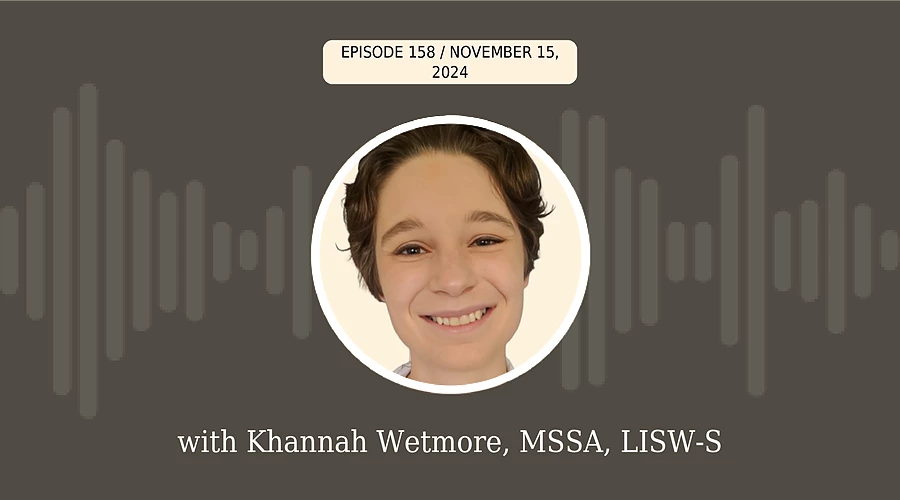
In this episode, we talk with therapist Han Wetmore about their extensive experience in hospice care and therapy related to grief and the dying process. They discuss the importance of presence and empathy for mental health professionals working with patients and their families during end-of-life situations.
Han shares insights on anticipatory grief, terminal restlessness, and how to support a loved one through their final stages of life. The conversation also covers ways for individuals to process grief and continue honoring their loved ones after they have passed.
Nicholette Leanza:
Welcome to Convos from the Couch By LifeStance Health, where leading mental health professionals help guide you on your journey to a healthier, more fulfilling life.
Hello, everyone. I’m Nicholette Leanza, and on this episode I’ll be talking with therapist Han Wetmore about grief and loss and the death and dying process. So welcome, Han. Great to have you on.
Han Wetmore:
Yeah, I’m very excited to be on. Thank you.
Nicholette Leanza:
Why don’t we start, please tell us a little bit about yourself?
Han Wetmore:
Sure, sure. My name is Hanna, I go by Han Wetmore. I have had a very long career in hospice. I actually started out when I was 14 as a volunteer and have spent the majority of my life ever since then, working in hospice in some capacity. I was a volunteer, a home health aide, and then when I graduated from social work school with my master’s degree, I became a hospice social worker and I worked full-time in hospice. I did both home hospice and I also did inpatient hospice for quite some time, and then I did that full-time up until a couple of years ago, and then I decided to make the switch to therapy and moved over to rape crisis for about six months. And then I found myself at LifeStance here in private practice. I still do hospice work. I moonlight there on the weekends occasionally. I actually live just down the street from David Simpson Hospice House. So I pop down there. I work five to six to eight hours and I just scratch the itch.
Nicholette Leanza:
Got you. So it sounds like this was definitely an expertise specialty you were definitely drawn to, it sounds.
Han Wetmore:
Yes, absolutely. In fact, I’ve even had the opportunity when I worked full-time in hospice, I had multiple chances to present nationally at the National Hospice and Palliative Care Organization’s conferences, at the Interdisciplinary Care Conference, and also the administrative conference as well. And I had the opportunity to present about LGBTQ+ plus needs at the end of life, and also how to maximize younger people that are working in hospice and being able to give them the opportunity to exercise that passion and how older people that work in the field can support people from younger generations coming in.
Nicholette Leanza:
Gosh, love that. So you’ll definitely have a lot to share with us today on your knowledge on this topic.
Han Wetmore:
Yep.
Nicholette Leanza:
So, as we begin, how can mental health professionals help patients and their loved ones cope with anticipatory grief and the process of letting go?
Han Wetmore:
Really, I think one of the best ways that mental health professionals can help either their clients who are dealing with somebody like a loved one who is experiencing the dying process or occasionally even clients themselves who are diagnosed with a terminal illness, the number one thing that I encourage for mental health professionals is presence. Just be there. All you really need to do is listen and offer support.
Different clinicians, individual clinicians will probably have their own personal experiences, death, grief and loss. Sharing small amounts of that, giving a little bit of self-disclosure whenever appropriate can also help somebody feel more connected with that clinician to be like, “The professional in front of me. They get it, they understand it. They’ve either been through it themselves, maybe they’ve been a caregiver, maybe they themselves have professional experience doing this kind of work.” Presence is really important. Empathy and care is also very important. I encourage people to try to avoid platitudes when helping out with trying to help people cope with death, grief and loss. Oftentimes you hear, “It’s God’s plan,” or, “There’s some kind of greater purpose for this.” That’s something that grieving people will often tell me that is not helpful at all.
Nicholette Leanza:
I think the people probably saying those are thinking they’re being helpful and sharing those, but it seems like it’s possibly the opposite, that it’s not so helpful then.
Han Wetmore:
Of course, and many mental health professionals have nothing but good intentions, and I truly believe that, especially with grief, because what we want to do is we want to help people feel better as best as we possibly can in that moment. The problem though is that with grief, there really is no feeling better. There’s nothing magical that you can say that would really help. So the best possible thing is to say that, “It sounds like you are really struggling. It sounds like that this particular aspect of it is really difficult for you.” Just bearing witness to their grief and their pain, it can really help people move forward and prepare for the process. So that’s the number one thing I encourage, and it really does, it sounds like it’s like, “That’s it? It’s really just presence?” It really is just presence. That is the best possible thing even in the anticipatory grief process and even after the fact too.
Nicholette Leanza:
Thank you for sharing that because I think oftentimes mental health professionals who maybe don’t have a specialty in grief and loss often don’t know what to say. So you giving the guidance of just presence and validation of the struggle could be very helpful.
Han Wetmore:
Absolutely.
Nicholette Leanza:
Can you help us understand what is the dying process?
Han Wetmore:
Absolutely. So I have seen the dying process many times. I’ve also been at bedside while people have actually died, and the dying process varies wildly from terminal illness, but there are certain hallmarks that we see pretty much across the board regardless of what the patient is dying from. So one of the biggest things that we notice that often scares people when they’re seeing it for the first time is the concept of visioning. So oftentimes when people are going through the dying process, it is incredibly painful and stressful for the body. So the brain and the miraculous organ that it is helps the dying person with as much as it possibly can to provide the comfort that it can to make the process easier.
Visioning is one of those things that we see. So sometimes people that are dying and their loved ones are in the room, the dying person might be reaching up, or sometimes they might say that they see somebody that’s passed before, “Oh, there’s my wife, don’t you see mom in the corner?” They’ll see pets. I even had one patient that visioned a gigantic Oreo. That was his visioning process. All he wanted was Oreos at the end of his life. And it can seem very frightening to people when they see that for the first time, but it’s actually very comforting for the person that’s dying.
We tell people that the only time we want to intervene medically or psychosocially is if it’s clear that person is demonstrating a lot of distress or fear or anxiety. The other thing that we notice is something that’s actually called terminal restlessness. So as people are approaching the dying process, the body becomes very restless because of the pain and the anxiety. A dying person doesn’t have the ability to use language in the same way that we do. So what will happen is oftentimes they will try to take off their clothes, take off their brief, try to rip their bedsheets off. Sometimes they’ll even try to climb out of bed or fall out of bed in very extreme cases.
And another thing that we tell people is never restrain in that situation because restraining can cause more harm than it can actually help. The thing that we would most possibly do is non-pharmacologically, we would create very calming environment for them to help. Maybe candles as long as the smell is not too intense, soft music, low lighting, just a general sense of peace in the room. And then of course, if they have hospice in place, the hospice doctors and nurses would make sure that person medically has what they need in order to be comfortable through medication as well.
Another big thing that comes up often is the body’s lack of ability to have food or drink at the end of life. Swallowing muscles are reduced as the dying process occurs. This is a very natural process. The body also does not need nutrition in the same way that somebody who is very healthy needs nutrition. So oftentimes, and because food is such a sign of love for so many people, someone will feed, they’ll try to feed their loved one, but what they actually don’t know is that it’s actually causing pain because they can’t swallow and sometimes it goes into the lungs and creates aspiration.
So we always encourage people really just small amounts if they can tolerate it and foods that they love, things that they really, I have had some patients that say, “I want a steak dinner before I die.” By the time the steak dinner gets there, they can’t eat it. So then what you do is there’s little sponges on a stick that most facilities have. So what they’ll do is they might soak a little bit of the juices or they might soak a little bit of something like ice cream, like melted ice cream or melted sherbet. I even had one patient that soaked a little bit of vodka on the sponge at the end of life. And just anything small that creates that level of comfort. Of course, doing it under the direction of the hospice team is most important because we want to make sure that person is comfortable.
But I think oftentimes when people see that their loved one isn’t eating or drinking anymore, they immediately think, “Oh, they’re starving to death.” But that’s actually not true. It’s the body’s natural way of shutting down at the end of life. So those are the three biggest things that think oftentimes come up.
Nicholette Leanza:
Those are really helpful, especially the last one of the shutting down of eating and things like that, because it’s true. Oftentimes people will show their love by wanting to feed them or bring food, and so you explaining that could actually be potentially a detriment if you are trying to feed them too much or something. So no, thank you for sharing that.
Han Wetmore:
There is one other thing that I will also add too.
Nicholette Leanza:
Sure.
Han Wetmore:
And this is actually right at the very end, maybe the last 24 to 48 hours of life. Oftentimes when people are in the active dying process, as we call it, they don’t respond at all. They will respond to absolutely no stimuli, or maybe they’ll only respond to very extreme stimuli if they’re being bathed or if they’re being changed and they’re not really able to use language. They’ll oftentimes make noises like groaning or crying, but it’s very small. But those reactions are usually very muted.
Something that has, I’m not going to say terrified, but definitely disturbed or confused family members before, is that sometimes as people are dying, the blood flow actually leaves their extremities, like their hands and their feet and sometimes even parts of their face and goes to try to keep the internal organs going as long as possible. So oftentimes what we see is called mottling. It’s black and blue patches on the skin. What we tell people again is that’s completely normal because people oftentimes get very cold at the end of life. In a situation like that, you just put a nice soft blanket over them or a warmed blanket, you keep them covered up. Oftentimes as a part of the physical examination, the nurse or the doctor will check to see how progressive the mottling has become. The more progressive it is, the more likely it is that person is approaching death. So that’s another thing that people often see. But I think of those four things, I think by and large, those are the big four things that come up most often.
Nicholette Leanza:
Got you. No, thank you for sharing those. What role can therapy play in helping patients find meaning, closure, and even peace as they approach death?
Han Wetmore:
So it very much varies from person to person. I have met some people that are very prepared for their death and that are oftentimes very relieved to know that, “Okay, I’m at the end of my life. I have reflected on my life and I feel that I have raised a great family. I’ve had a great career. I’ve been a really big part of my community, et cetera, et cetera, and therefore I feel like that I’m ready to go.” So those people don’t necessarily need therapy. They might need some support of their hospice team or their hospice social worker as they mentally prepare for the end of life, but they might not need therapy specifically.
However, there are some people that just due to age due to how intense the illness is, sometimes if the terminal illness is related to substance abuse like alcohol, cirrhosis of the liver, that oftentimes people will feel a lot of existential suffering. And what we would often encourage at that point is really helping patients reflect on their life and aspects of their life, helping them find aspects that they’re very proud of, the things that they really have that they feel very joyous about. Even if it’s just small things like, “Hey, I lived alone for most of my life and I drank to the point where now I have alcoholic liver cirrhosis, but I took care of 10 cats over my lifetime and I gave them a really happy life. They all died very comfortably. That was my impact on the world,” for example.
Nicholette Leanza:
Finding some little glimmers, if you will.
Han Wetmore:
Yes, yep. Absolutely. Some meaning in the suffering and some meaning in life, and it’s primarily that. And then also just having somebody be present in the actual process. Calling back to what I said earlier, having somebody say, “I recognize the pain that you are going through. I’m hearing your suffering, and I’m here to listen,” because this is not an easy process, and this is not a journey that is easy to do alone. Oftentimes, traditional therapy models like DBT or CBT or anything that we might typically default to for a patient that is healthy aren’t really necessarily helpful at this point in the process. It’s usually just trying to be present, as I said before, and also doing a little bit of Viktor Frankl’s logotherapy almost and doing that meaning making, doing a lot of life and relationship review also.
The other important thing too is that it can be really helpful to take in members of the family also, or loved ones or friends, people that are very close and supportive to the patient. So oftentimes I would say that mental health professionals would be really well-equipped if they were able to have good collateral information too, and have a relationship with other members of their care team too.
Nicholette Leanza:
Now, for loved ones caring for someone at the end of their life. What are some healthy ways to process their own grief while still being supportive?
Han Wetmore:
So this is definitely something that came up a lot when I was working full-time. People would oftentimes struggle with their own existential suffering related to their grief if they watched their loved one die. It definitely depends on the type of relationship that they have with their loved one. Either if that relationship was very close, like a husband and a wife or a married couple or people that have been together for a very long time, or if the relationship is very complicated, like parent taking care of an adult child at the end of their life, or even if the relationship is adversarial. I run into many situations where the legal next of kin and the primary caregiver is a child who is taking care of a parent that abused them for their entire life, helping them deal with how complicated it must feel to be in that position.
So I really encourage that people practice really robust self-care as much as they possibly can. So making sure they have a good exercise routine, that they’re being able to make good, healthy meals for themselves, that they’re really tapping into their social support system as well too. So if they have people in their life that in addition to the person that they’re caring for, relying on them, asking people for help is one of the big things. I run into caregivers so often that say, “I can do it on my own. I can do it on my own. I’ve got this, I’ve got this,” and I respect that wholeheartedly. However, you don’t have to do it alone. Encouraging people to reach out to the people in their life and not only just ask for help, but also just ask for support too, even just emotional support.
Nicholette Leanza:
How can the bereaved continue honoring the life of their loved one after they have passed away?
Han Wetmore:
So something that I do often now, I do a lot of grief therapy too, is I help people reflect on the type of relationship they had with the person that died and ask them if there’s anything that that person really enjoyed doing. Were they a really robust gardener? Did they have a farm? Did they enjoy quilting? Did they enjoy art? What sorts of things to that person really gave them that full view, whoever the person is that died before and encouraging them to do little rituals or little things to try to honor that person’s life. I have had clients, for example, that maybe their grandparents or their parents really liked gardening. So one of the things that they would do is I’d say, “Okay, then. In the spring, work on building a vegetable garden.” Or for example, I’ve had other patients where their loved ones really liked art. Maybe they weren’t like a professional artist, but they really just liked art in general. So one of the big things is that I would encourage is why not try tapping into that same medium? Go to a painting class, go to a pottery class.
The other thing that’s important too is especially related to objects. Grief is attached to physical objects, and when a loved one dies, oftentimes their clothing, their belongings and things like that are left behind. And a really painful part of the process for many people is cleaning out the house and trying to get rid of everything. So I urge people to pick out some things that really remind them of that person. If they had any stuffed animals, if they had any paintings or any art pieces. I’ve had some clients that even like video games that their loved one hadn’t really enjoyed, hold onto those. You don’t have to get rid of everything.
Hold onto those and put them in a place where, I even had one client who made a little shrine to her grandmother just in the corner of her room. It just had her picture and then it had a couple of things, personal effects. This oftentimes calls back to a lot of Eastern cultures do this in the house. When someone has died, they will have a small shrine where family can pray to where family can pay their respects, and that shrine stays up forever. There’s not really an expiration date on that shrine, and that is a really well-adjusted way to deal with grief.
Nicholette Leanza:
Love that. Great idea, what you shared, I had a client make a quilt from some of her deceased loved ones clothing, which I thought was a really great idea.
Han Wetmore:
Yes, the memory quilt. I have loved that. I’ve seen many of those and it’s so wonderful.
Nicholette Leanza:
Definitely. Any other takeaways you’d like to share?
Han Wetmore:
So probably the biggest takeaway that I would really encourage people is that if you have a loved one that’s diagnosed with an illness that will likely become terminal, I tell people as much as the emotional impact of it and processing that is difficult, take some time to do that, but then start planning legally as much as you possibly can, especially if you are that person’s next of kin or that person’s spouse or that person’s adult child, whatever your relationship is, get an attorney in place. Get all those advanced directives set up. Start talking about what you want to do with the estate. Talk about how the probate court process might go.
Really just start planning for that, and not only just legally, but also care wise. Who is going to take care of you? Do you want to die at home? Are you okay with dying in a nursing facility if I can’t take care of you? Do we have the funds to hire care? Do you want me to start working on applying for Medicaid? Again, as painful and frustrating as that process can be, especially as you’re trying to process your anticipatory grief, when people get to the end, it is so much smoother if, for example, funeral arrangements are already in place. It is so much smoother if you can just hand your hospice team their healthcare advanced directives. That way everybody is on the same page, the caregivers are established, and you can prepare for the process as much as possible. It might not necessarily change how strongly you grieve, but it will change how smooth the process goes, which can make your grief less complicated.
Nicholette Leanza:
Great guidance there.
Han Wetmore:
Yep, and that’s pretty much, honestly, that’s pretty much it. That is definitely my biggest takeaway.
Nicholette Leanza:
Thank you. Thank you, Han. These are all really great ideas you shared. You also helped us understand more about the actual dying process and giving specific tips of how to navigate it. So I definitely appreciate this conversation today. Thank you.
Han Wetmore:
Absolutely. It has been such a pleasure.
Nicholette Leanza:
I’d also like to thank the team behind the podcast, Jason Clayden, Julianna Whidden, and Chris Kelman with a special thank you to Jason Clayden who edits our episodes. Thank you again for listening to Convos From the Couch. Take care, everyone.
Listen to this episode on your favorite podcast channel:


Related Podcasts
Taylor-Made Therapy: Music as a Tool for Healing
Labubus and Beyond: How Collectibles May Support Mental Health
Unveiling Gen Z’s Coping Strategies


