Share
Share
LifeStance, in partnership with Researchscape International, conducted a survey to understand how the current economic environment—characterized by inflation, rising living costs, mass layoffs, and recession fears—affects Americans’ mental health and their ability to access mental health care.
Impact of Economic Stress on Americans’ Mental Health: Research (2025)
Purpose of the Research
Methodology
On behalf of LifeStance, Researchscape International conducted an online survey of 1,026 U.S. adults aged 18 and older. The survey was fielded from June 4 to June 5, 2025. Key findings are based on comparative analysis of survey data from 2023, 2024, and 2025. The credibility interval is plus or minus four percentage points for questions answered by all respondents. The data was weighted to the U.S. population by nine demographic questions.
Summary of Findings
The study reveals significant mental health impacts due to financial stress—coined as “stressflation”—particularly affecting Millennials and Gen Z. Economic pressures are preventing many from seeking or continuing mental health care despite high recognition of its importance.
Detailed Insights
- Financial Stress is Pervasive and Rising
- 83% of Americans report financial stress driven by inflation, mass layoffs, rising living costs, and recession concerns.
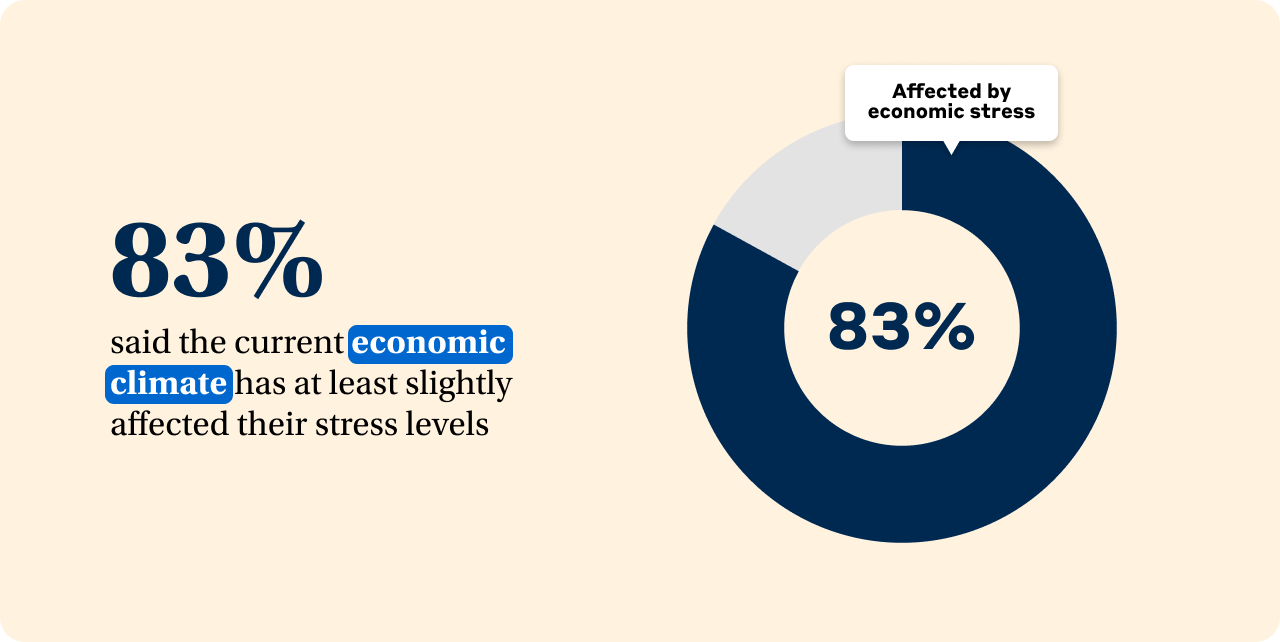
- Millennials (67%) and Gen Z (58%) are more significantly impacted compared to Baby Boomers (41%) and Gen X (49%).
- 83% of Americans report financial stress driven by inflation, mass layoffs, rising living costs, and recession concerns.
- Economic Strain Limits Access to Mental Health Care
- 60% of respondents have avoided seeking mental health care due to financial constraints, an increase from 58% in 2024.
- Respondents experiencing high financial stress (41%) are more than twice as likely to forgo mental health treatment compared to those with lower financial stress (17%).
- Americans Prioritize Mental Health Care
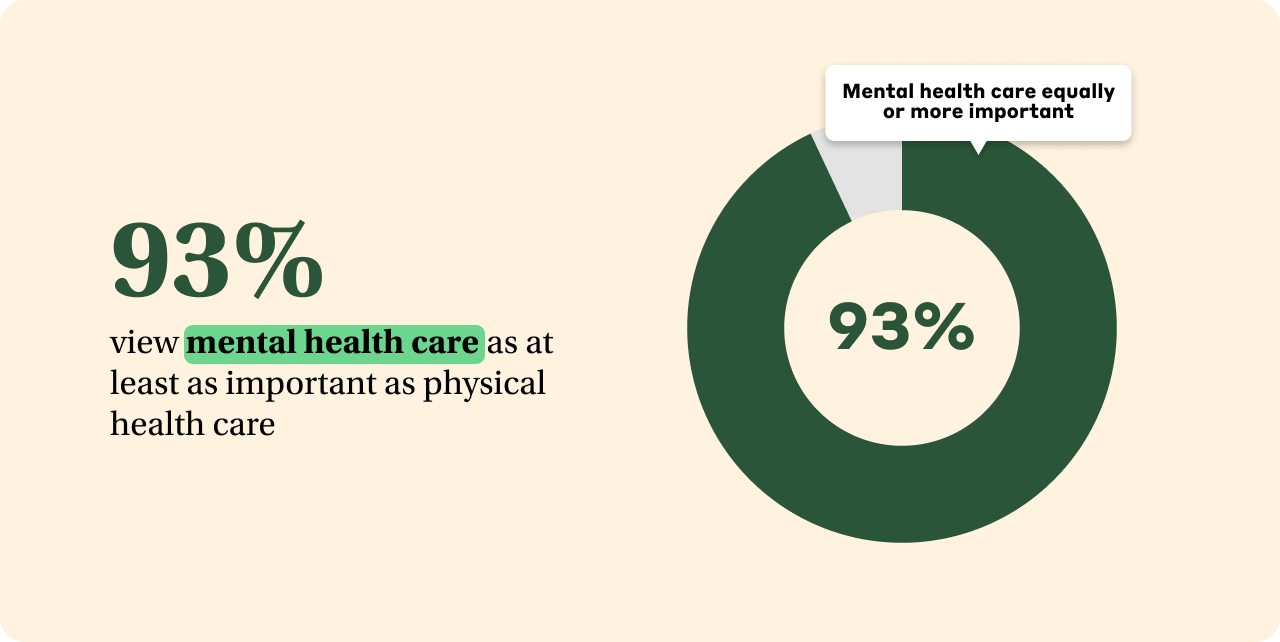
- 93% believe mental health care is at least as important as physical health care.
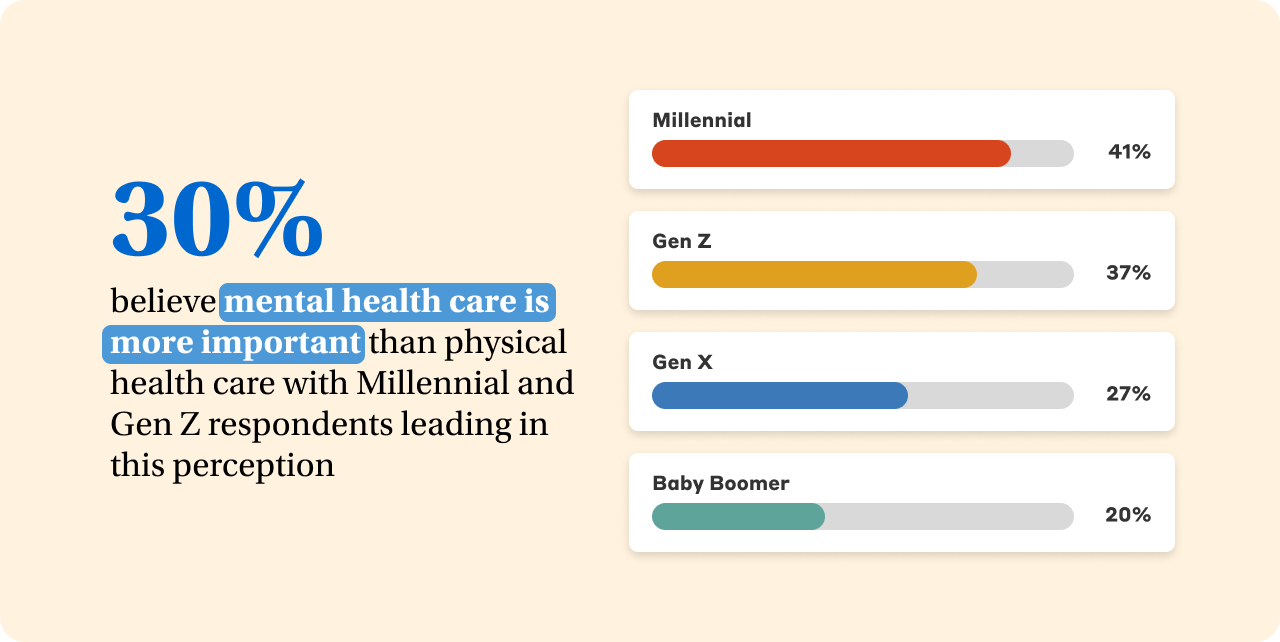
- Nearly 30% view mental health care as more important, notably among Millennials (41%) and Gen Z (37%).
- 93% believe mental health care is at least as important as physical health care.
- Cost Increasingly Deters Therapy Engagement
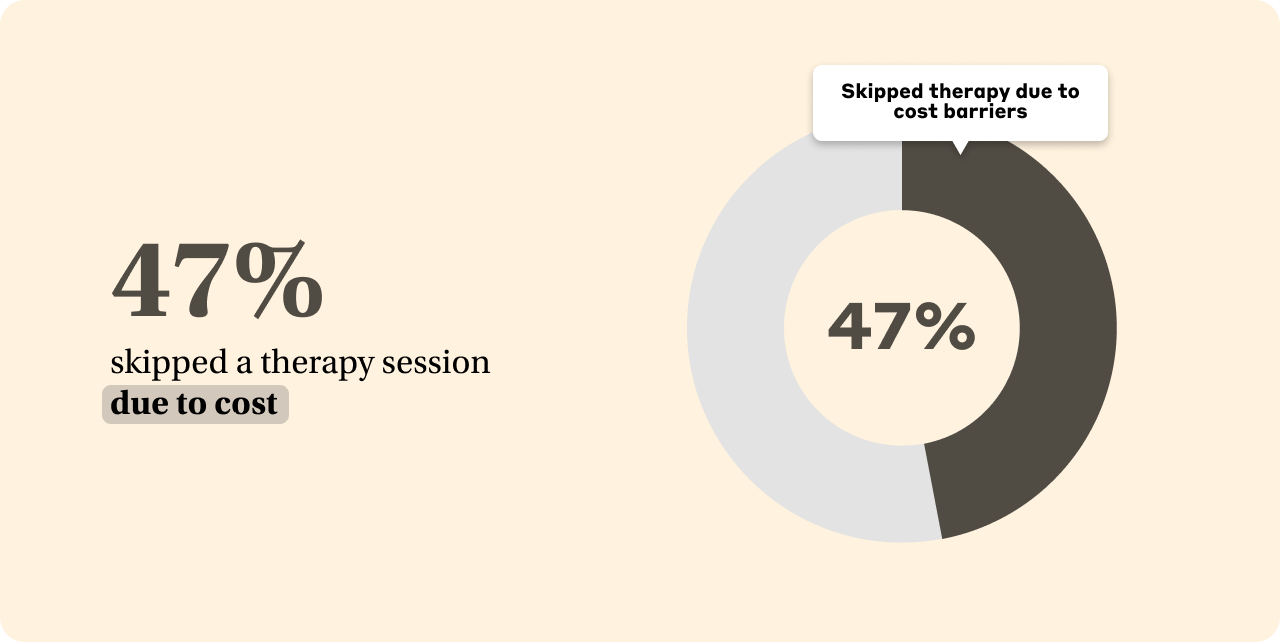
- 47% skipped at least one therapy session due to cost.
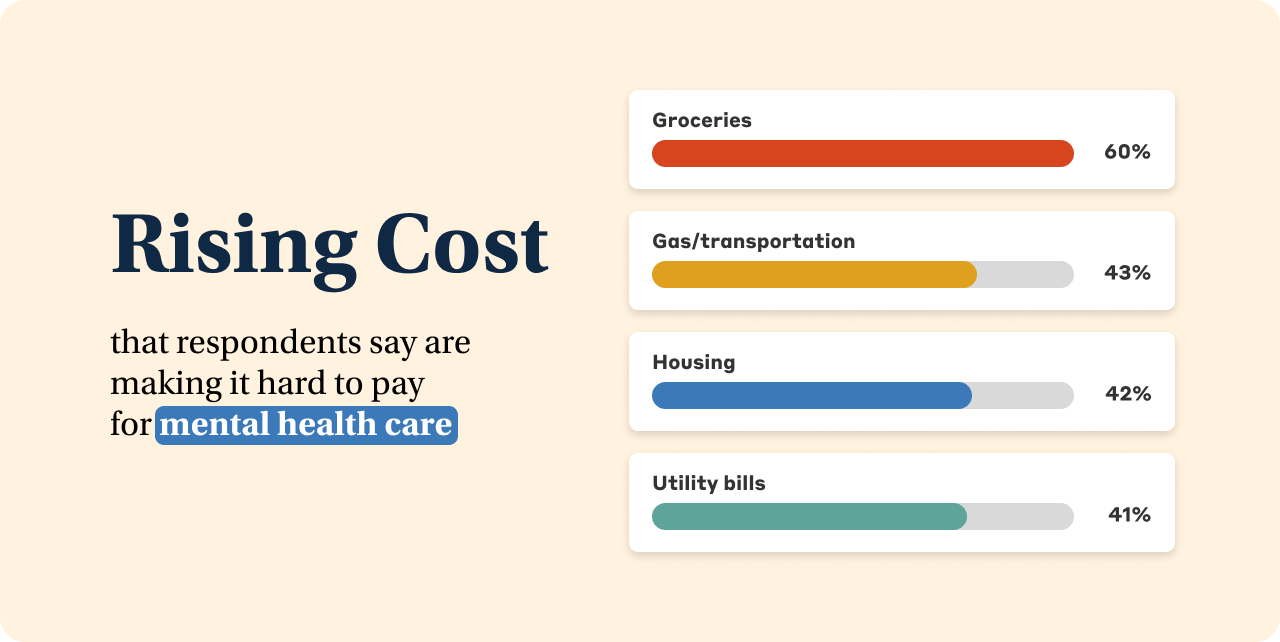
- Significant deterrents include the rising cost of groceries (60%), gas/transportation (43%), housing (42%), and utility bills (41%).
- 47% skipped at least one therapy session due to cost.
- Therapy Continuity Challenged by Financial Decisions
- Over 44% faced choices between mental health care and other critical expenses.
- Despite financial barriers, more respondents are returning to therapy sooner:
- 33% resumed therapy within one week in 2025, up from 8% in 2024.
- 44% returned within one month, lowering those going without therapy for over a month from 71% in 2024 to 56% in 2025.
- The Compounding Cycle of Stress and Mental Health
- Among those highly affected by economic stress, 41% reported cost as a significant barrier to care, compared to 17% of similarly stressed individuals without financial barriers.
- This dynamic underscores a troubling cycle where financial stress exacerbates mental health issues while restricting access to essential support.
Conclusion
Financial stress significantly impacts Americans’ mental health and restricts their ability to consistently access care. Despite these barriers, Americans are increasingly prioritizing mental health, resuming therapy sooner after financial disruptions. Addressing these financial barriers is critical for improving national mental health outcomes. Accordingly, LifeStance accepts over 300 insurances to help individuals get the care they need and lessen “stressflation.”
Authored By