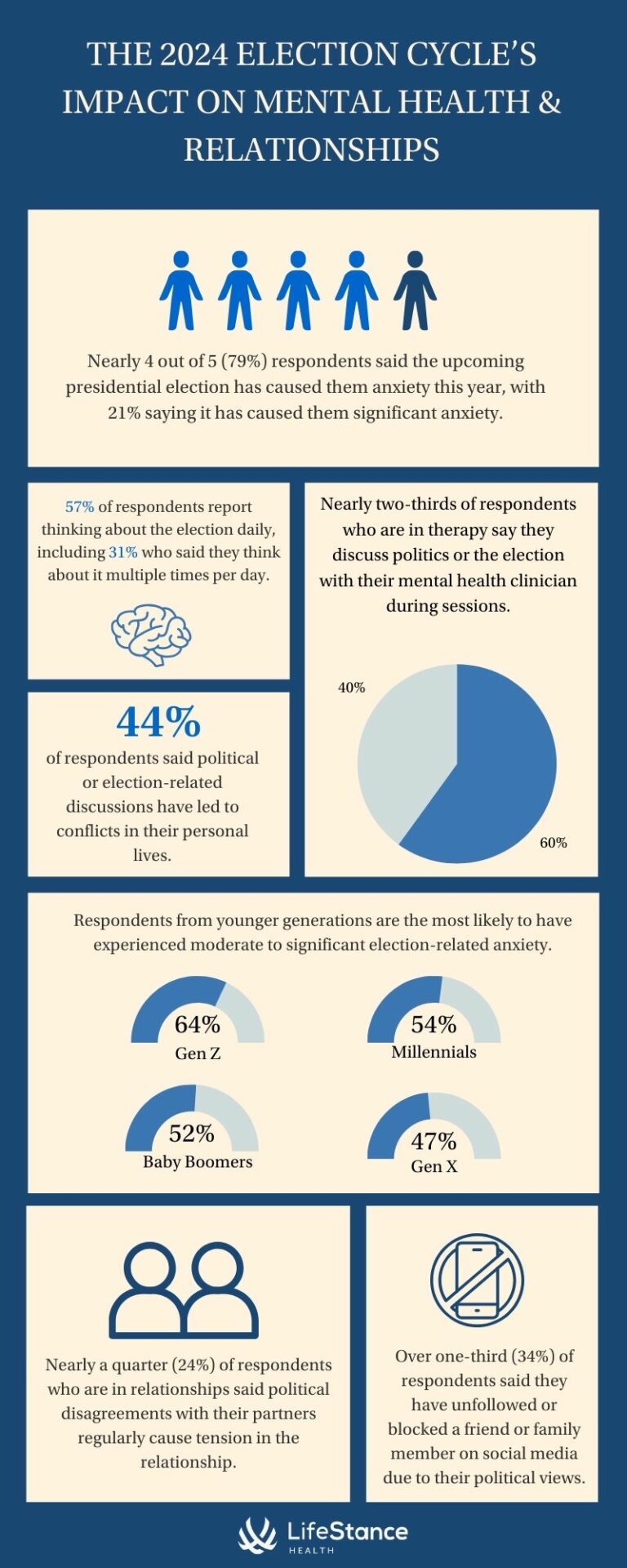
When political disagreements escalate, they can take a toll on mental health, leading to feelings of anxiety, stress, and even depression. Some families have such a deep political divide causing persistent conflict which can lead to family estrangement, where members may stop speaking to each other altogether.
Recognizing signs of distress or escalation during political discussions with family is crucial to maintaining healthy relationships. These conversations can easily become heated, leading to hurt feelings or long-term rifts. By identifying and addressing signs of discomfort early, we can prevent arguments from spiraling out of control, allowing for respectful dialogue.
Dr. Truesdale notes the emotions to be aware of are avoidance, sadness, resentment, and anger, lack of positive connection or wanting to connect, feeling disrespected, or othered. If ever feeling this way, first see if you feel comfortable (or if it feels safe) to communicate how you are feeling to create a space to be heard, respected and understood. If not, seek someone you feel safe communicating with, or someone else who may share your views that can be of support. Remember that you do not have to change your views just because someone else does not share the same views as you. Seek support, counseling, engaging in self-soothing skills, and self-validation. “We all have the right to our views, even if we do not agree. The importance should be on safety and respect,” says Dr. Truesdale.
Dr. Lambert describes social isolation behavior as another indicator. If you start avoiding family gatherings, social events, or even one-on-one conversations because you anticipate they will involve political talk, this could be a sign that you’re experiencing burnout. Withdrawing can be a coping mechanism, but it also indicates that the emotional burden has become too much.
If you’re also replaying conversations with family in your head, it may be a sign of mental health distress, says LeFevour. If you are still having imaginary arguments long after the conversation is over, or you’re thinking about how to respond next time, it might be time to step away from the conversations.
Disturbances in sleep or bad dreams may be another sign. When political discourse leads to generalizing any group of people in a specific way, objectivity may be lost.
It’s important to recognize these mental health risks and address them before they cause lasting damage to family relationships.
 Share
Share